Advice that helps.
An assistant that knows the catalogue and belongs to the merchant’s own shopping experience.
Shopware · Agentic Commerce Lab
Agents are changing how people find products, compare offers and buy. At Shopware’s Agentic Commerce Lab, we turn that shift into concrete projects, developed in the open with merchants’ interests at the centre.
A team at Shopware. A public space for experiments, references and new possibilities.
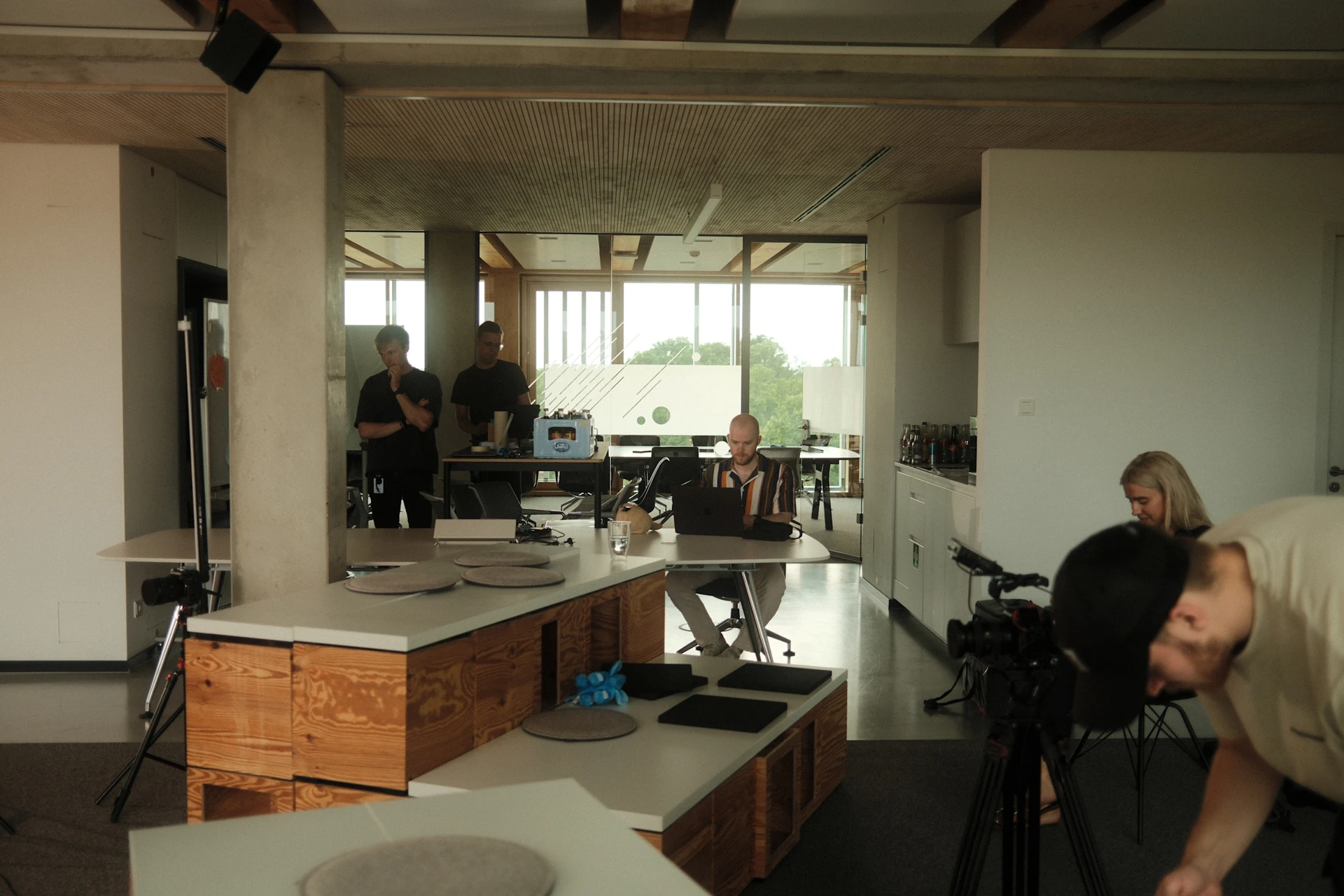
Why the Lab exists
We work where the next product generation is still taking shape. How does an agent discover a merchant’s offer? How does a brand remain tangible? When may an assistant act? Those questions become prototypes, protocol work and tools that others can try and develop further.
Our reference point is commerce itself: more helpful purchasing, greater freedom to build a business and decisions that remain with the merchant. What proves useful in an experiment can become the foundation for an integration or a product.
How we learn in the Lab · Chapter 17An assistant that knows the catalogue and belongs to the merchant’s own shopping experience.
Product cards and relevant experiences make an offer tangible in a conversation with an assistant.
Explicit tools make products, variants and the cart available to agents.
Discoverable capabilities, reliable offers and clear handoffs connect the purchasing journey.
The projects
The public repositories show what we are working on. This page connects the ideas; each project contains its code, documentation and current development status.
An agent first needs to understand what a merchant offers and which capabilities the shop provides.
Help an agent understand what a shop offers and how to work with it. The plugin publishes a directory of data, services and available actions.
A starting point for a purchasing journey in which capabilities can be discovered before an agent uses them.
A product is more than a name and a price. AXP brings variants, configurations, quality signals and embedded experiences into an agent’s interface.
It explores how advice and the distinctive qualities of an offer can matter in an agent channel.
Search products, select variants and work with the cart: the shop exposes these capabilities inside the current browser session.
Explicit tools connect the assistant to the shopping journey the customer can see on the website.
Helpful advice and a relevant interface connect product knowledge to customer intent. In the shop and in the assistant.
A shopping assistant in the merchant’s own shop: customers can ask questions, compare products and add suitable items to their cart.
Merchants and developers adapt the model, product knowledge, capabilities and presentation to their business. Purchasing continues through the regular Shopware checkout.
A sales agent needs reliable rules. This framework connects advice, product search and cart preparation to the merchant’s policies and systems.
Prices and commercial commitments come from the connected commerce system. The same flow can serve chat interfaces and agent-to-agent communication.
Bring the catalogue into the assistant: customers search for items, see product cards and prepare their cart in a conversation.
An embedded interface connects the conversation to the checkout where the customer completes the purchase.
What does a shop look like when its interface responds to the customer’s current intention? This experiment lets an agent generate relevant views and render them in the browser.
It connects A2UI, Shopware Frontends and a product interface assembled live in the browser.
A customer describes what they want to do. An agent panel can read the shop page and carry out steps through its interface.
It explores another way into the existing storefront experience: natural language and visible interaction.
An answer becomes an action: an offer, a prepared purchase or a change in the business. The merchant sets the boundaries.
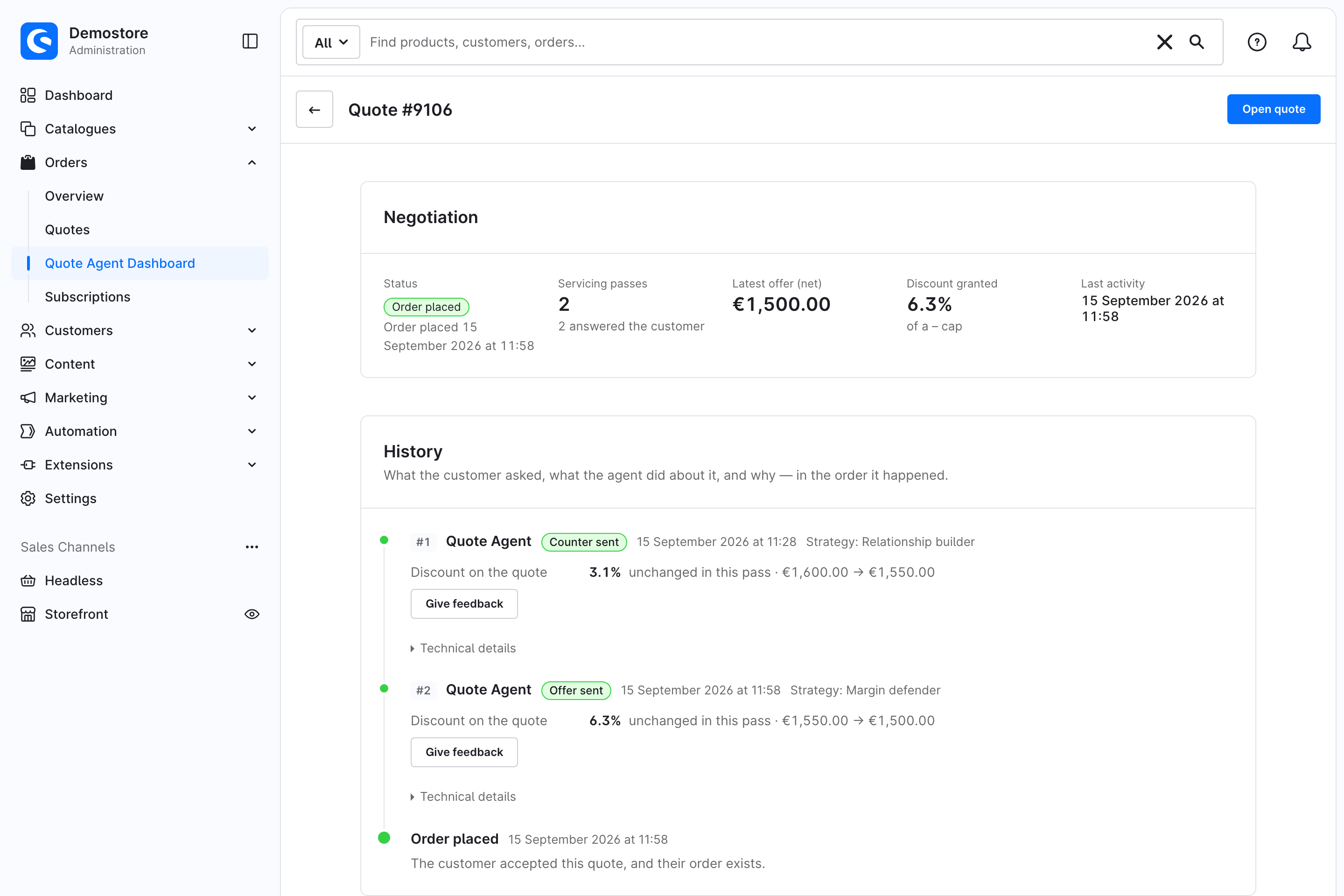
A B2B customer asks for a better price. The Quote Agent responds within the discount limits set by the merchant.
The history shows offers and decisions. Requests beyond the pricing remit go to the team; draft mode lets people approve every response first.
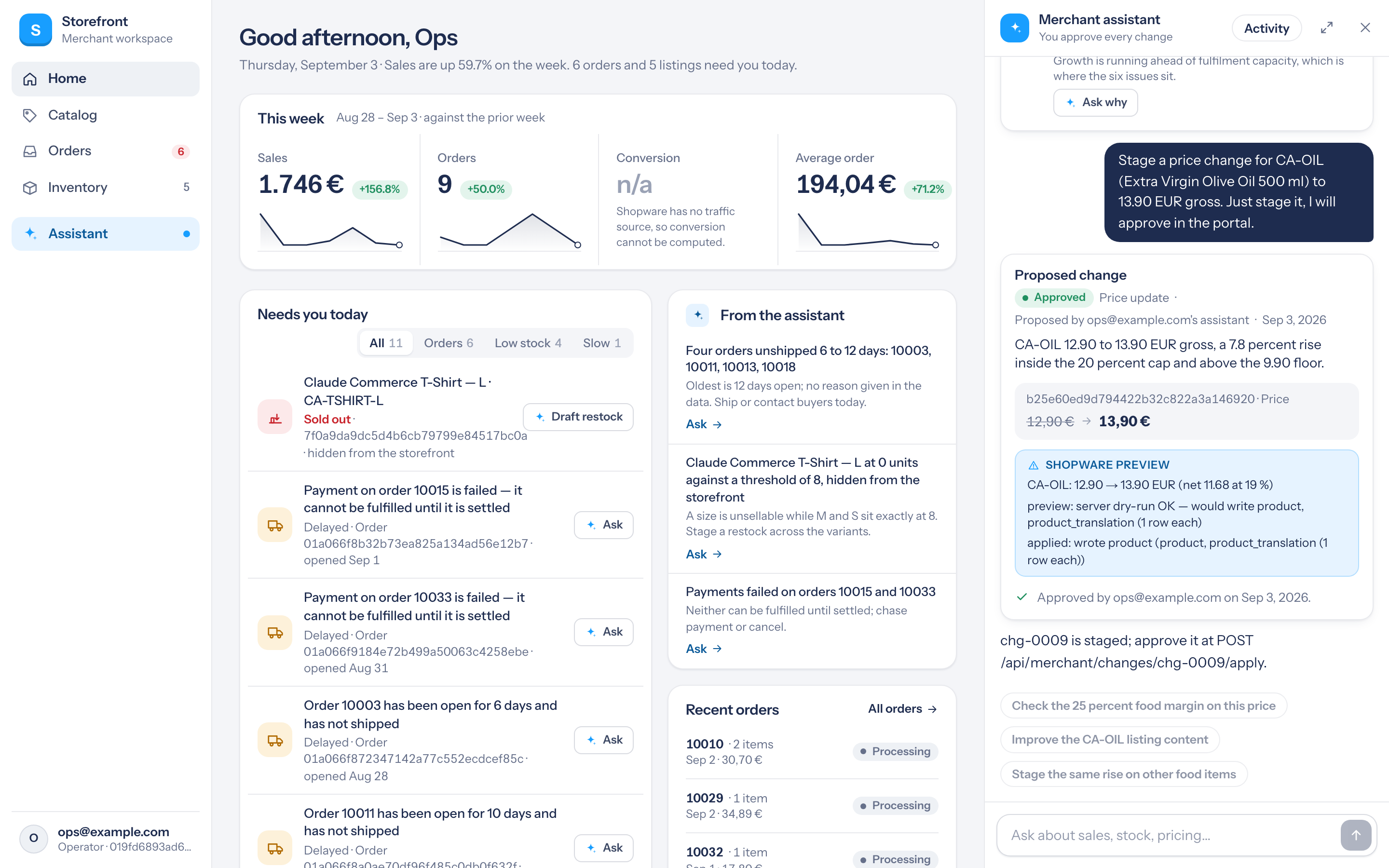
Two perspectives on the same business: a shopping agent finds products and prepares a purchase. A merchant agent reviews sales and proposes changes.
Price, stock and promotion changes are checked in a preview and then approved by the merchant.
How does an automated buyer pay? This project explores a payment flow in which the shop sends a payment request and the buyer signs it digitally.
The reference connects Shopware orders to the x402 protocol and documents local tests and payments with test tokens.
Ideas become software more quickly. Our tools help put agents to work deliberately and understand their results.
Agents can write a great deal of code. Pawl connects requirements to verifiable outcomes and records which work actually passes a check.
A tool for development and research that makes progress visible through verified effects.
A workspace for the coding agent: tools and runtime live in a development environment dedicated to the project.
It helps prepare environments deliberately and run agents separately from the everyday workstation.
Which agent negotiates better, and at what cost? RFQ Bench compares buyers, sellers and strategies in controlled B2B negotiations.
Recorded traces make offers, walk-away limits and outcomes inspectable and available for fresh analysis.
A game of hide-and-seek with an agent that sees very little of its surroundings. It needs to use tools and adapt its search during play.
A playful experiment in perception, action and the information an agent actually needs.
Inside the projects
Two original captures from the public project documentation, showing how offers, decisions and approvals connect.
The Merchant Quote Agent shows the counteroffers and the path from a request to an order. This capture comes from the documented demo shop.
In the Claude Commerce experiment, the merchant sees the price change prepared by the agent. The portal connects analysis to a visible approval.
Research & talks
Not every question starts with a plugin. Research reports and talks connect practical work to the wider shift.
How can we distinguish people, bots and agents? This research report examines behaviour, environment and metadata as possible signals.
The report, sources and figures are published alongside the typesetting project.
Stefan Hamann and Daniel Nögel on the practice of AI-assisted software development: the keynote as a complete presentation readable in the browser.
With the examples and visual explanations from “A Reality Check on AI-Driven Software Engineering”.
From experiment to product
The early Lab project led to an integration into Shopware’s official Agentic Commerce plugin. The original repository remains available as a reference.
Project overview checked on 15 October 2026, based on the Shopware Agentic Commerce Lab’s public repositories and documentation. About the Lab