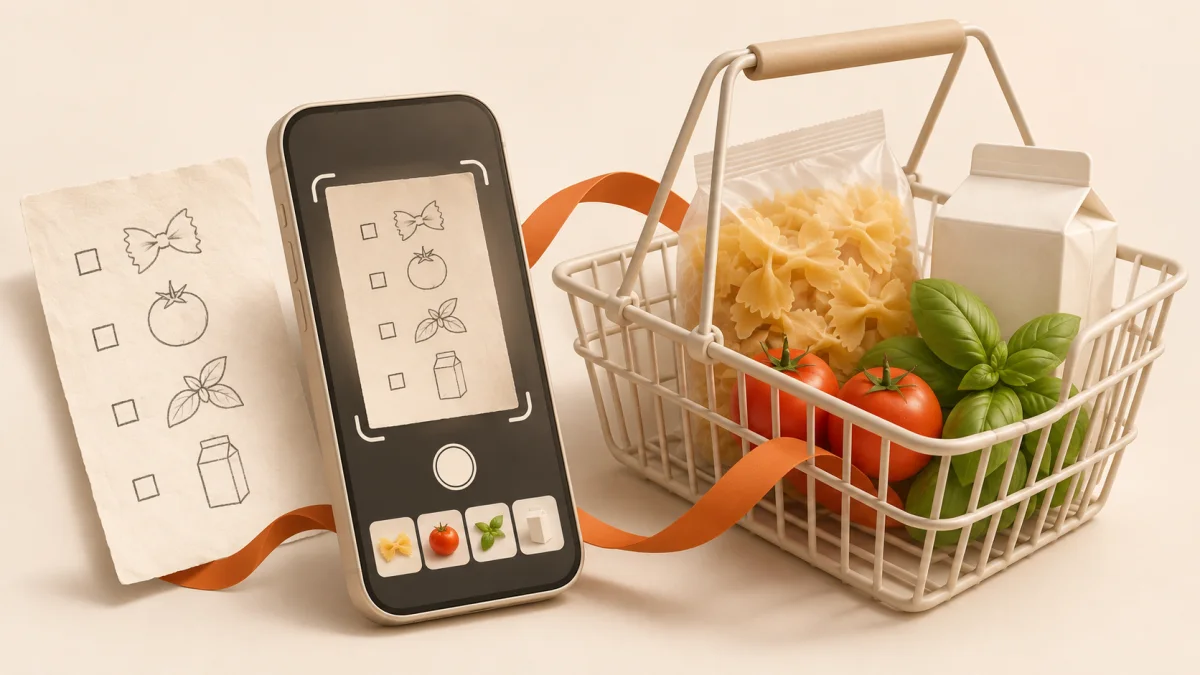
Start with a photo of the shopping list
Pasta, tomatoes, basil. Take a photo of the list on the kitchen table and the shopping assistant can put a cart together. You can review the suggestions and add what you need. That’s the part of Walmart’s Sparky I’m interested in. Searching for each ingredient takes several passes through the shop. Here the retailer gets a chance to help with the whole trip at once.
Walmart gave a new figure for that on 19 November. On the company’s earnings call, CEO John Furner said US Sparky usage had grown 129% from a year earlier. He also described baskets as 40% larger. In those remarks Walmart did not define the usage measure or specify the comparison behind the basket figure. The numbers do not tell us how much extra revenue Sparky generated.
What can Sparky do in the Walmart app?
Sparky is Walmart’s own shopping assistant. The US product page describes finding products, comparing choices and planning meals. Sparky can use a photo of a grocery list to suggest items from Walmart’s catalogue. The shopper can review the proposed cart. Walmart also describes voice and image features and says Sparky recently launched in Canada, Mexico and at Sam’s Club in the US. The call does not give a market by market breakdown of the features available.
A meal starts from a different place than a product search. In Chapter 1 of my book, the suitcase has to arrive by Friday, fit in the cabin and stay within a budget. The customer delegates the search for an outcome. A grocery list makes the same point. A bigger bag of pasta won’t make dinner work if the right sauce is missing or an ingredient contains something the customer can’t eat. Putting together a useful cart takes the right pack sizes, reliable product information and stock that’s actually available where the customer shops.
When is a bigger shopping basket a good result?
Someone buying groceries for the week may be more likely to open the assistant than someone replacing a carton of milk. Their baskets would differ even before Sparky made a single suggestion. I’d want to see how many shoppers with the same task get a complete, suitable order. Compare groups with similar delivery areas and assortments and count correct orders per 100 shopping trips started. Track missing ingredients, declined substitutions and items cancelled afterwards.
Compare that with Meta Muse at Loblaw. In that case the customer starts with an outside assistant that connects to a participating retailer. Sparky is built into Walmart’s own shopping experience. In either case, a missing pack or a pickup slot that just disappeared tells you more about the connection to the store than a tidy list of recommendations.
What I’d try first as a retailer
Pick a job where customers already make several searches. At a pet supplies shop, it might be buying next week’s food and litter together. Check whether the assistant finds the usual variety and pack size, explains a suitable alternative when stock runs out and carries the right pickup time through to the order. My guide to measuring agentic commerce separates discovery, the offer, a confirmed order and service. If more customers end up with the complete shopping trip they came for, I’d move on to the next task.
Source and further reading
Read the original announcement ↗