What Shopware announced
In its November 2 release notes, Shopware describes Bright Shelf as a research preview from the Agentic Commerce Lab. The tool uses a store URL to gather information about a brand and its tone, then helps prepare visual content. Suggested formats include product images, lifestyle scenes, ads and short videos.
What this means for merchants
A catalog needs imagery across many different customer touchpoints. Turning existing brand information into useful first drafts may help teams prepare those assets more quickly. The practical test is whether an image represents the actual product and fits the brand. Variants, colours and product attributes still need a careful review before use.
Where it fits
Shopware calls Bright Shelf a research preview, and its lab projects evolve independently of regular Shopware releases. This is an experiment in AI assisted content creation. The announcement does not describe a finished autonomous shopping feature.
From an idea to an image a merchant can use
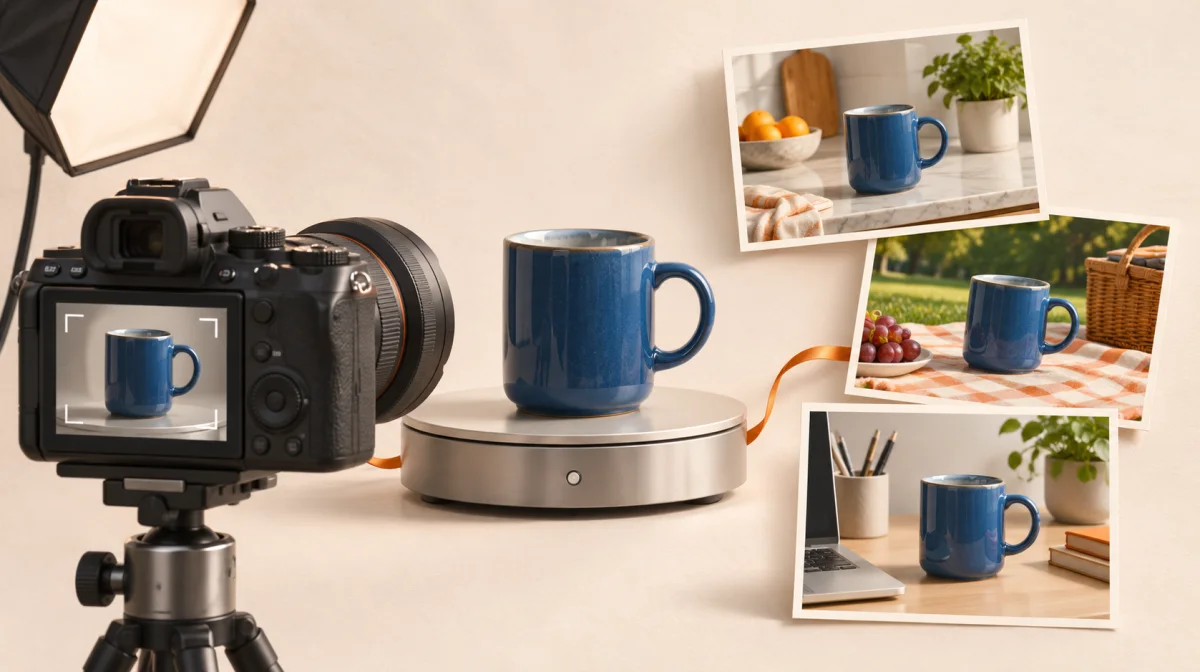
Imagine a merchant who wants to show a new mug in three settings: on a kitchen table, at an office desk and on a camping trip. Producing those variations usually involves a brief, photography and review. Bright Shelf is intended to make it easier to prepare ideas from the context of the store. Whether a particular image works for a campaign depends on the result.
A useful workflow starts with the real product and its approved attributes. The team can then compare drafts and check them: is the handle the right shape? Does the colour match the variant actually sold? Does the picture show an accessory that is not included? Details like these shape what a customer expects to receive.
Putting the experiment in context
In the book I describe how the Agentic Commerce Lab learns: an idea is tried against a concrete task before it becomes a dependable application for merchants. With Bright Shelf, that task is preparing brand aware visual content. A research preview does not establish whether or when it will become a regular product.
The connection goes beyond producing more pictures. Experience that improves a decision asks which presentation actually helps a person in a particular situation. A beautiful image is most useful when it makes the real product easier to understand and fits what the customer is trying to do.
The relationship between creative presentation and commerce also appears in my earlier article “The Yin and Yang of Commerce”. The tools have changed; the question of how creative work and dependable information fit together remains relevant.
A useful first trial
A small comparison can start with a handful of products whose attributes are clear. For each, a team can place the original product photo next to several drafts and assess product accuracy, brand fit and the time needed to correct them. A person should approve the results before they appear in a shop or an ad. Only a comparison like this can show the benefit in a particular operation.
Source and further reading
Read the original announcement ↗