
Buying and shopping
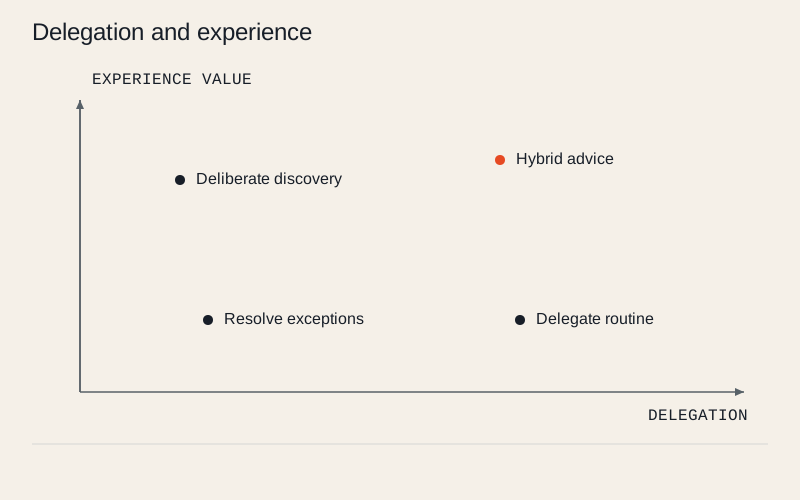
Some purchases should demand as little attention as possible, while others are deliberately enjoyed. The same person may want printer paper replenished automatically and spend hours trying an instrument. Agentic commerce needs to understand that distinction because maximum speed is the right objective for only some purchases.
A brand can serve customers in two ways: make delegation dependable and create reasons for voluntary attention. Automated replenishment and an inspiring store visit can belong to the same relationship. Expectations and operating processes must support each other.
Emotional value zones in practice
A gift should express something, an instrument must feel right and a sofa needs to fit the life of a room. A list of attributes rarely suffices because experience, taste and personal advice create part of the value. I describe these situations as emotional value zones. [S03, S10, S12]
A room view helps customers understand proportions, while the question they bring determines whether that is the useful medium. A material video shows a difference that a photograph struggles to convey. For two technical variants, a clear comparison can provide the best advice. Good experience chooses the form that makes the decision easier.
Generative interfaces and dependable commerce facts
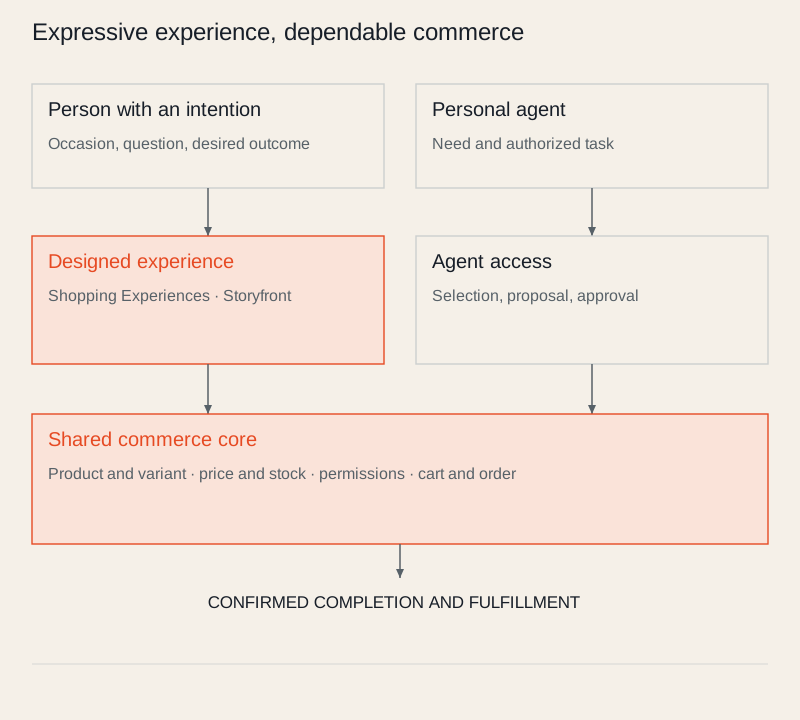
In my adaptive-storefront prototypes, presentation follows customer intent while product and transaction data comes from the controlled commerce core. I pursue this division of work because it gives design freedom while keeping purchases on dependable foundations. [S09, S08]
A generated image can convey atmosphere and use while fixed components supply price, variant selection and availability. Both must match the article customers will actually receive.
Experience becomes a response to intent
For a long time, a store was mainly a collection of pages. A homepage had to address many people at once; a category had to accommodate many different intentions. That was a sensible response to the technology available. It is not the only form digital commerce can take.
A useful experience starts with the occasion. Someone choosing a coffee machine for a small office needs different guidance from someone perfecting an espresso ritual. Product, imagery, explanation, comparison and advice should reflect that difference. As systems handle more background work, there is greater freedom to organise the visible experience around the customer’s actual decision.
At Shopware, connecting content and commerce has long been part of the product idea. Shopping Experiences provides a system of sections, blocks and elements for landing pages, categories and product pages, with content connected to product data. It gives design a reusable foundation rather than requiring each campaign to start from scratch. [S121]
![Shopping Experiences: original layout-editor image from Shopware documentation. Sections, blocks and elements connect design with commerce content. Source: Shopware. [S121]](/book/media/3544bcbd73a2f729.webp)
A team can describe advice or a product story and develop several designs with agents, while the brand directs atmosphere, selection and claims. An office coffee machine calls for easy operation; an espresso ritual calls for personal preference. Good design makes that distinction visible and supports the particular decision.
Storyfront: from a product page to a product story
Storyfront explores this transition. A product selection can become a connected story, combining spatial representation, movement, materials, explanation and advice that responds to the current question. Customers need not learn a company’s internal catalogue structure before making progress. The presentation can develop around the task they brought with them.
For a lamp, the designed experience can begin with its effect in a room and explain light, material and size along the way. Selecting a variant brings the binding purchase process into view. A technical product may instead benefit from an explanatory assembly with operating conditions and configuration, because the medium should help people understand their actual need.
![Storyfront demo from my VEYNDO experimental environment: a fashion experience with directly linked products. Original capture, 14 October 2026; German interface. [S129]](/book/media/43e3d05fc47428ad.webp)
In the fashion demo, a jacket, jeans and cap form a coherent selection with a distinctive visual language. Clicking the jacket opens details with price, availability and purchase options, turning a mood into a traceable route to the article. Presentation changes while the underlying item remains the same. [S129]
![From the editorial opening to a specific jacket, price and purchase option. Storyfront demo from my VEYNDO experimental environment; German interface. [S129]](/book/media/984ca3ba6d4b24db.webp)
The publicly documented Storyfront integration sends product identities and quantities through the same basket and ordering operations as the native interface. Because the commerce core calculates price, tax, shipping and availability and returns the confirmed outcome, the designed experience can offer greater freedom of presentation while keeping purchases dependable. [S126, S127]
The designed experience creates meaning while the commerce core makes commitments binding. A material story can therefore be emotional, provided the purchase still contains the correct variant.
Lichtfeld (fictional): generative lighting advice
Lichtfeld sells lighting and helps with room design. A customer wants a more welcoming living room and brings photographs, dimensions and an idea of the desired atmosphere. The combination should suit the room and existing furniture.
The assistant asks where people read, work or relax. Room views make different solutions imaginable. Alongside them are orderable products with dimensions, colours and installation requirements. Each decision turns the atmosphere into a specific selection.
The customer may prefer a light whose chosen colour is temporarily unavailable in their country. Advice can offer an available variant or another delivery date. If the customer wants to speak to a person, the adviser receives the requirements and selection already made. Planning continues even as the interface changes.
During testing, the team disables the room view and continues through images, specifications and conversation. It checks that the displayed variant appears in the basket and that the customer understands its actual proportions. Acceptance connects design with the product that will arrive.
Lichtfeld looks for better decisions: greater confidence, suitable combinations and fewer avoidable returns. Content design and maintenance are assessed against those effects. The business can see where a distinctive experience also makes commercial sense.
Shopware is developing both sides
Shopware’s public Community Day 2026 architecture connects Commerce Core, Nexus, Copilot, Payments and Experience Studio, introduced as a research preview. The core retains business logic, Nexus brings context together, Copilot works with it, and Experience Studio develops expressive commerce interfaces. The direction matters: more operational intelligence and more creative freedom on one foundation. [S123]
For me, these developments belong together. As an agent takes on background work, the person in front of the screen need not receive an increasingly generic interface. The capacity released can support better advice, more personality and a stronger individual identity. Automated operations and distinctive experience are two sides of the same opportunity.
ATELIER / YOU: turning imagination into a personal catalogue
My ATELIER / YOU experiment turns a reference photograph into a personal view of clothing and outfits. The Shopware storefront connects an image service to the session and product combination. I am interested in how closely imagination and selection can converge when presentation becomes personal while remaining tied to the product. [S113]
![ATELIER / YOU: personal product views from a reference photograph. Original screenshot with AI-generated demo content. Source: Stefan Hamann. [S113]](/book/media/27a6350fd6ea4c73.webp)
When experience moves out: the AXP prototype
Ask an assistant about a sofa and you will often see a product card: image, price, a few features and a link. Much of the merchant’s contribution stays outside it: the fabric configurator, the sample, the visual language and advice about how the product fits a home, including why pale fabrics and cats rarely make an easy combination. The customer interface moves; the full experience rarely follows.
That gap motivates AXP, the Agentic Experience Protocol prototype from our Agentic Commerce Lab. Its research question is how merchants can bring richer product knowledge and experience into an assistant’s interface. [S50]
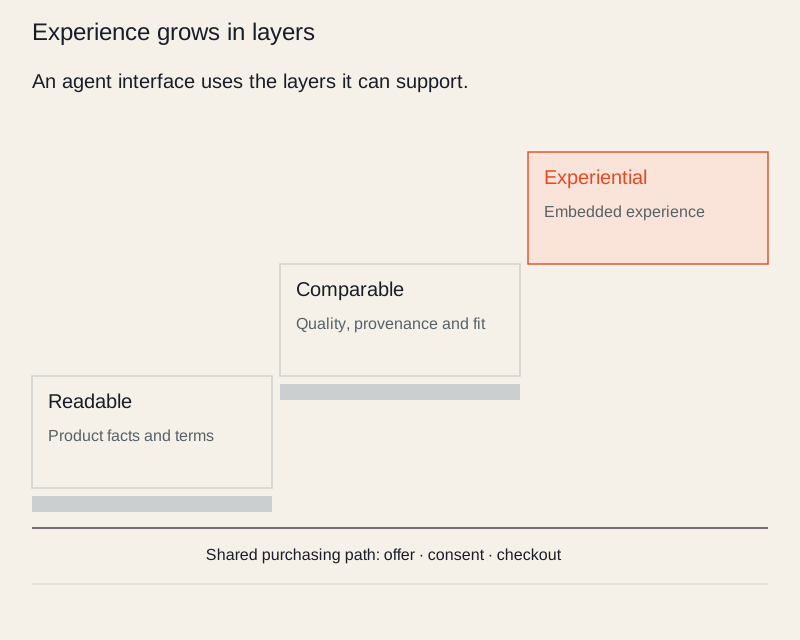
The prototype explores three answers: richer product types for variants, bundles, subscriptions and configurators; quality signals with provenance; and embedded experiences such as 3D or AR components communicating through defined events. Binding purchasing remains on the commerce route, for example a UCP checkout session.
For me, the most interesting issue is brand expression. A brand wants to express tone, imagery and a point of view. The assistant wants a useful answer that fits the conversation. A new balance has to emerge between the two, much as it did between brand shops and marketplaces, except that this time the assistant sets the rules of the stage.
MCP Apps raises related questions about interactive interfaces, host support and security. We need to understand which experience components travel well, how the host isolates them and what customers gain. A merchant should begin with structured facts and useful comparison signals, then add interaction where a channel supports it. The early layers remain valuable whichever approach gains adoption. [S67]
The experience influences choices beyond the visit
After planning a room, a customer may be able to say exactly which light she wants. She understands its proportions, has seen the material and knows how it is installed. She can later give that knowledge to her personal agent. The experience influences choices beyond the visit to the shop.
The merchant assesses a designed experience through fewer sizing errors, fewer installation questions and greater confidence about combinations, weighed against design and maintenance costs. Generated design is easy to reproduce, while the necessary product knowledge and advice develop within the business. Chapter 20 builds differentiation on that foundation.
The experience then needs a route to purchase. In the next part, we follow the suitcase from request through offer to delivery and place the protocols alongside the tasks they perform.