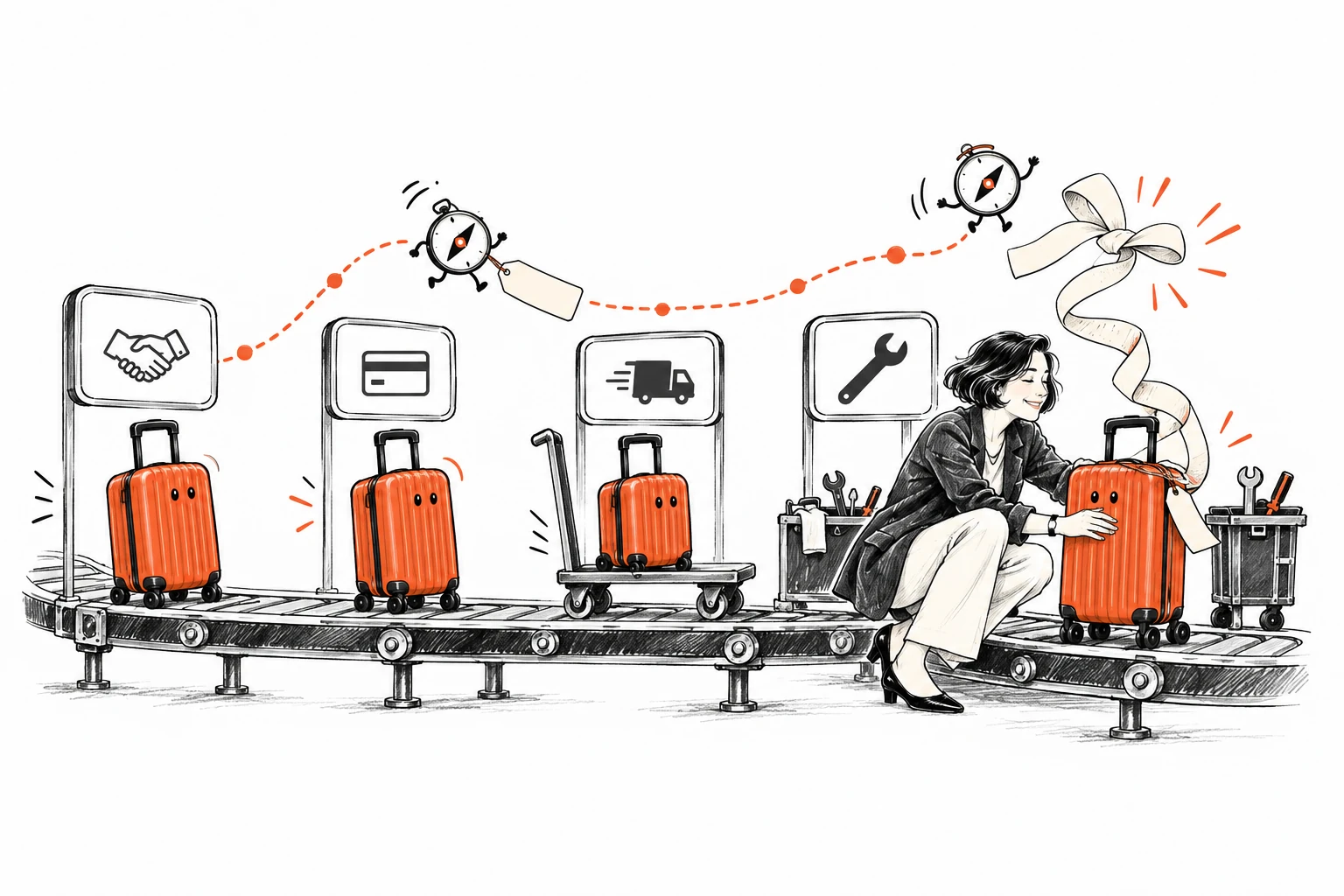
Now the suitcase needs to arrive
The traveller chooses one of three suitable suitcases and now expects a total price, order confirmation and timely delivery. To her, these belong to the same task even though the business must coordinate its range, pricing, customer account, payment and logistics.
This is where commerce protocols help. They describe the purchase so that an assistant and a merchant can work on the same transaction. The customer can stay in the conversation while the commerce core calculates the terms and maintains the order.
UCP connects the stages of the purchase
The Universal Commerce Protocol, or UCP, establishes shared terms for collaboration between customer interfaces, businesses and payment providers. A merchant describes the commerce functions it offers. Depending on the supported scope, these include product search, baskets, checkout, account linking and order information. [S28]
For our traveller, the assistant might find a suitcase, add suitable accessories to a basket and request a specific offer. After purchase, it can receive information about the order. The merchant presents its capabilities in a common form that different supporting interfaces can use.
“a new open standard for agentic commerce” — Vidhya Srinivasan, Google, 2026. [S27]
UCP allows both sides to identify the functions and versions they can use together. This supports ongoing development: a shop can add capabilities while existing connections continue with their agreed scope. The dated versions and payment integration examined for this edition appear in the protocol passport. [S94, S95, S96]
ACP provides another route to the merchant
The Agentic Commerce Protocol, or ACP, from OpenAI and Stripe also describes exchanges between agents and merchants. It began with checkout; the specification examined here also covers baskets, product feeds, orders, authentication and MCP access. [S25, S29, S97, S98]
For strategy, the shared direction matters more than a contest between initials: assistants should be able to interact with a merchant through specific commerce operations. UCP and ACP provide different models and ways to connect. A merchant can support several routes using the same pricing and order management underneath.
The customer channel determines which connection is worth building first. Its participation terms and supported markets are part of the decision. A protocol choice becomes a distribution choice: which route reaches our customers, and what can they do there?
The offer records the decision
Back to the suitcase. Search showed €169. The order now requires a total including shipping and tax, the correct variant and delivery to the chosen destination. The shop calculates those terms and records how long they remain valid.
The customer consents to that offer. If delivery moves from Thursday to Saturday, she needs to decide again even if the price stays the same. A suitcase arriving on Saturday is no help to a traveller leaving on Friday. The delivery date belongs in the offer as firmly as the price.
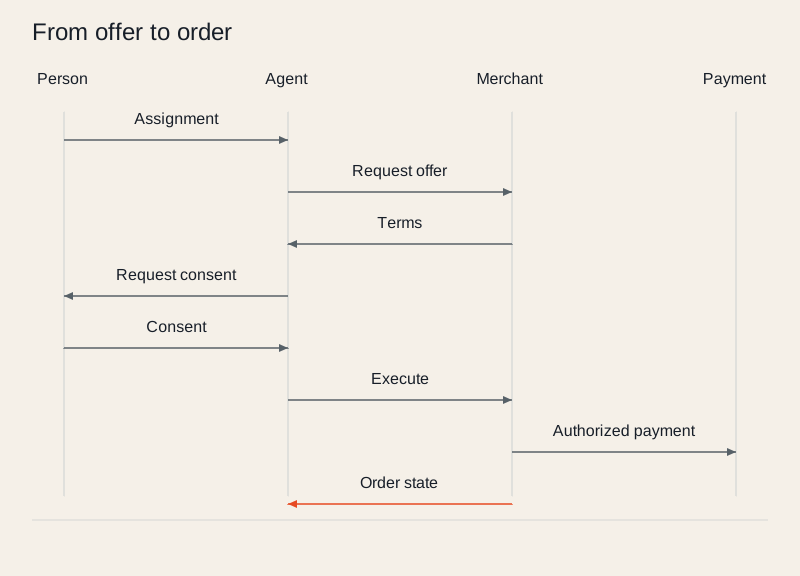
Consent should be simple and clear
The customer should see at a glance what she is consenting to: product, variant, total and delivery date. For replenishment, she may have agreed a defined scope in advance. Her assistant might reorder the same consumables up to a monthly spending limit.
This pattern runs throughout the book. People decide what matters to them; systems stay within the agreed scope. Familiar, well-defined tasks allow more to be arranged beforehand. A new financing agreement or a substantial change brings the customer back into the decision.
AP2 connects the request to the payment
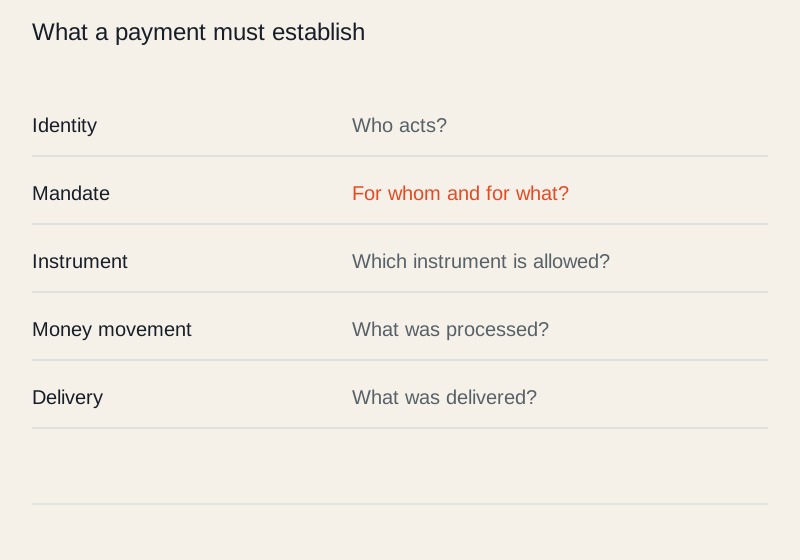
For a payment, the merchant and payment provider need to establish that it belongs to the customer’s request. The Agent Payments Protocol, or AP2, describes checkout and payment mandates that connect conditions and consent with the subsequent transaction. Standardization continues within the FIDO Alliance ecosystem. [S38, S39]
“a common foundation for trust” — Nishant Kaushik, FIDO Alliance, 2026. [S39]
For our suitcase, the budget and delivery conditions belong to the request; the offer the customer consented to turns them into a specific purchase. The chosen payment provider and payment network then process payment. AP2 provides a shared form for the evidence of consent.
For decision-makers, this is a significant development: permission can travel with the transaction. It makes the progression from purchases with personal consent to bounded delegation tangible. Chapter 12 addresses the legal design and European authentication requirements.
Recognizing agents and enabling payment
Visa TAP supports recognition of legitimate agent requests, while Mastercard Agent Pay connects payments with identity and trust mechanisms. Stripe’s Shared Payment Tokens make payment details available within a limited transaction scope. These offerings serve different parts of the purchase and need to fit the actual entry point. [S40, S41, S42]
As in a physical store, customer recognition, amount, consent and payment status need to agree. Agent-mediated purchasing distributes that work across systems which must preserve the connection even when the interface changes.
Start with the payment methods your customers use
For a German merchant, the starting point is usually payment on invoice, PayPal, cards or instalments. An agent should explain this choice and obtain the confirmation required for the selected method. Customers’ familiar payment preferences guide the integration.
Invoice payments depend on buyer identity, billing address, due date and, where applicable, a credit check. Instalments introduce financing terms. A good purchasing journey makes that choice visible before the customer accepts it. The merchant then needs to know when it can dispatch and who bears the credit risk.
Wero expands the European choice. Its documented e-commerce journey leads to confirmation in a banking or Wero app. Merchants select an integration according to available markets, banks and payment providers. The assistant guides the customer through it and then continues the purchase. [S140]
Integration partners connect existing routes
PayPal offers Agent Ready and Store Sync as commercial routes into agentic purchasing experiences. The provider can combine product connectivity with payment infrastructure. Its WebMCP work described in September 2026 also addresses the connection to the website. [S47, S48]
For merchants, this combination can make the first integration easier. Compare the reachable customer channels, payment methods, fees and services with your objectives. Record the data the partner needs and how customer service and accounting connect back to existing operations.
Agents also become buyers
A research agent may need paid information or a specialist service along the way. For machine payments of this kind, x402 and the Machine Payments Protocol, or MPP, introduced by Stripe and Tempo connect service use with a payment request. APIs, data and digital services are particularly relevant applications. [S46, S44, S45]
A single task can generate many small calls, so the operator needs a task budget that brings their cost together and gives the agent a commercial limit. A thousand tiny charges still add up to a bill, however modest each looks on its own.
x402 in the Lab: making the payment journey executable
Our x402 plugin connects a Shopware order to a machine-readable payment request. It lets us investigate the path from request through payment to the update in the shop. [S110]
When the connection drops along the way
After the traveller consents to the purchase, the screen freezes, leaving her unsure whether ordering and payment succeeded. A dependable flow retrieves the task, reads its state and displays the order confirmation or completes the remaining step.
A recognisable identifier ensures that repeated requests still refer to the same intended order. Developers call this idempotency; for the traveller, it simply means that losing the connection should not order a second suitcase.
The payment service reports authorisation or collection, while the ERP tracks shipping and stock. Because those updates belong to the same order, the assistant can continue the task coherently and refer to actual fulfilment.
The relationship continues after checkout
After purchasing, the traveller wants to know whether her suitcase will arrive on time. Later, she may need an invoice, an exchange or a replacement wheel. Merchants already regard these as part of the customer relationship. A personal agent should also be able to resume the task it started.
Personal agent protocols address that longer relationship. One current approach is Personal Agent Protocol, developed by Meta and Sierra with industry partners. The draft published in October 2026 connects business discovery, authentication, sessions, APIs, browsers and conversation. Its Operations extension describes how a change can be proposed, receive customer consent and be carried out. [S33, S34, S35]
For an exchange, the merchant connects the existing order to an alternative whose extra cost and return conditions the agent explains to the traveller. Her consent lets the case proceed without restarting the relationship. Decagon’s PACT also addresses explicit customer mandates and builds on A2A and OAuth. [S53]
The practical task extends beyond any protocol name: recognise a returning customer, continue the request, obtain suitable permissions and involve a person when needed. That turns an individual purchase into an ongoing relationship.
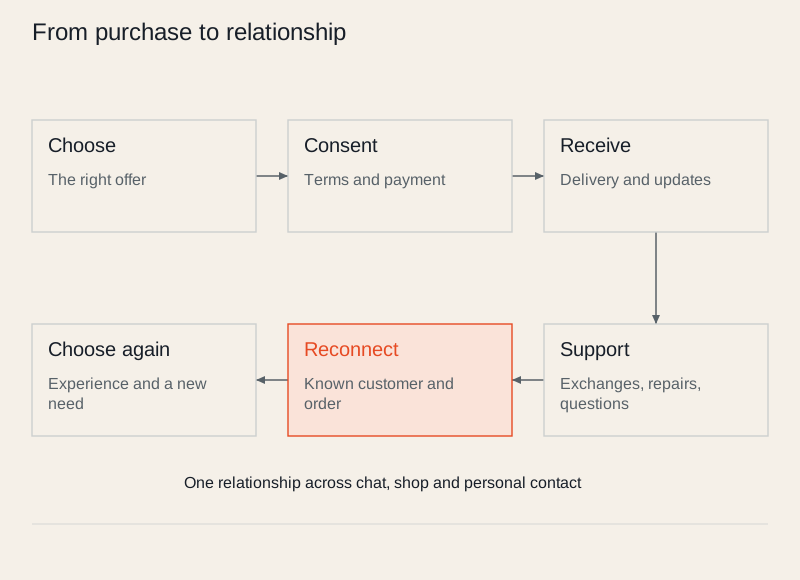
Who keeps the customer relationship?
An order gives the merchant a transaction, but not automatically a complete customer profile. Depending on the channel, the merchant may receive delivery and service details, an intermediary-provided contact address or a link to an existing account. Establish what actually arrives before integrating the channel.
The traveller would benefit if the purchase appeared in her existing customer account. That requires dependable account linking which she initiates and understands. A similar-looking email address is insufficient evidence. Orders, warranties and service rights should also remain retrievable at the merchant when she changes assistants.
An email address supplied for delivery updates is not permission to send a newsletter. Marketing needs an appropriate legal basis and compliance with advertising rules. In Germany, electronic advertising generally requires prior express consent; the narrow existing-customer exception in section 7(3) UWG has its own conditions. An agent-mediated purchase creates no additional exception. Consent must be attributable to the relevant company and purpose and capable of being demonstrated. [S59, S155]
Loyalty programmes need equally clear rules: who owns the points account, which purchases qualify, when points are credited and what happens after a return. Acting for a customer, an agent could apply an existing benefit. It should not silently create a marketing profile or spend points the customer intended to keep. Points, status and marketing consent therefore remain separate records.
This changes the work of retaining customers. A newsletter may trigger fewer purchases, while repair services, a saved equipment record or convenient replenishment become more valuable. These services give customers a reason to send their agents to a particular merchant. Retention can then be measured through repeat purchases, deliberate account linking and service use.
Before selecting a channel, resolve four things: contact routes, linking of existing accounts, usable order and service data, and loyalty rules. If an intermediary controls communication, the merchant needs to know how customers can still exercise their rights and reach its service. Customer relationships become something deliberately supported by the product, rather than a hoped-for mailing list.
After purchase, a second request begins
The suitcase arrives on Saturday. The purchase was technically correct, yet the journey’s purpose was missed. A useful agent channel therefore connects orders with delivery exceptions, service, withdrawal and refunds. The personal agent needs to retrieve the case and continue with appropriate permissions.
| Service event | What the system must know | Who decides |
|---|---|---|
| Delay | Promised and revised date | Customer on an alternative or cancellation |
| Return | Order, period, reason and item condition | Merchant under applicable rights and terms |
| Defect complaint | Defect, evidence and previous remedy | Responsible service team, with escalation |
| Partial refund | Item, amount and previous refunds | Authorized role |
| Chargeback | Payment reference and dispute state | Payment service under its procedure |
A return shipment, an accepted return and a booked refund are separate states. A retry after a lost connection must find the existing refund. Service must not create a second payout because the first response was lost. Management should track correctly resolved cases and total service costs alongside completed purchases.
Nordstern (fictional): A personal outdoor purchase
Nordstern sells outdoor equipment. A customer is planning a multi-day hike and needs a jacket. She has a budget, wants to avoid certain materials and already owns some equipment. What “light” and “warm enough” mean for this trip becomes clear through conversation.
The assistant asks about season, weather and previous experience. It compares suitable jackets and presents material, weight and sizes. If an important detail is missing, it asks the merchant. An interactive guide or a person can help with fit. The customer moves from an open intention to a specific choice.
Once the shop calculates price and delivery, the customer sees the jacket, size and return terms and consents to the first purchase herself. Her personal agent can retrieve that same order the next day and ask about delivery because selection, purchase and service belong to one relationship.
Before opening the route, Nordstern’s team tries a size change and an offer that has expired. In both cases, the customer should understand what changed and be able to confirm the choice. The team later observes whether advice saves time, resolves questions and reduces unsuitable purchases. Additional demand and intermediation cost enter the calculation in Chapter 14.
Keep the whole task in view
An integration proves useful through service: the shop must retrieve the selected suitcase, the applicable terms and the order. What happens if the traveller switches from the conversation to the shop halfway through?