
A journey with a new division of work
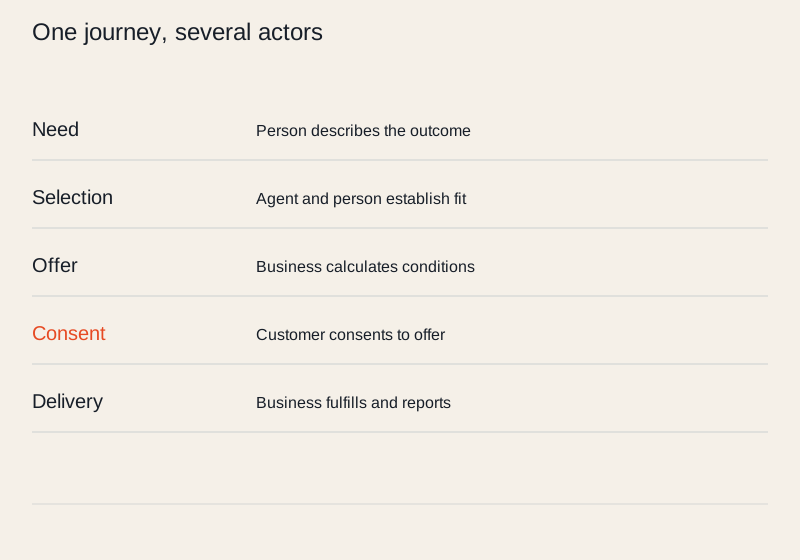
A journey starts with an occasion: a trip, a broken component or the wish for a better room. The customer discovers possibilities, compares, decides and later finds out whether the choice was right. Agents can assist at many of these stages.
The customer describes an intention, an assistant searches, an adviser explains a difference and the shop handles the order. For example, the adviser explains which of two suitcases rolls more quietly on uneven ground. The assistant then connects that choice with the budget and delivery deadline.
Two kinds of intent
A defined need has relatively clear success criteria: a known toner cartridge, a specified replacement part, the same coffee as last time. An open intention is less precise: make a living room more comfortable, choose a suitable present or improve a team’s equipment.
In the first case, reduce unnecessary interaction; in the second, help the customer develop useful criteria before recommending a product. An agent can ask questions, show examples and explain trade-offs. A premature product recommendation solves the wrong problem if the customer does not yet know what “better” means.
Handoffs as a product capability
A good handoff saves the customer from repeating work. Someone moving from an assistant to personal advice should find their request and selection waiting there. Service needs the requirement, relevant conditions, open questions and next decision.
Some handoffs are a deliberate part of advice: a customer wants to feel a material, discuss a difficult fit or confirm an important purchase with a person. The agent prepares the conversation and passes on the information it needs. Personal service becomes easier to reach and can begin with the question that matters.
Measuring a different kind of success
Good advice helps a customer make the right decision. Sometimes it leads straight to a purchase; sometimes to a tape measure or a fabric sample first. Measure how often customers complete their task, which questions remain and how frequently a selection needs correcting later.
Familiar metrics remain useful when matched to the step: a helpful recommendation, a confirmed basket and delivery without a complaint. Together, they show whether the new route improves things for customers and merchants. A high conversion rate with the wrong products would mainly be an expansion programme for the returns department.
One person owns the whole purchasing journey
Someone in the business needs responsibility for the whole purchasing journey and the quality of its handoffs. Marketing can improve selection, development can improve checkout, and customer service can handle complaints. One person coordinates the handoffs between them.
In a small business, that person may be the managing director. With the advisers and whoever runs the shop, she follows ten frequent requests through to delivery. They discover that the assistant finds the right model but loses the promised delivery date when it opens the basket. An abstract AI project becomes a specific task with someone responsible for it.
Business, advice and shop operations
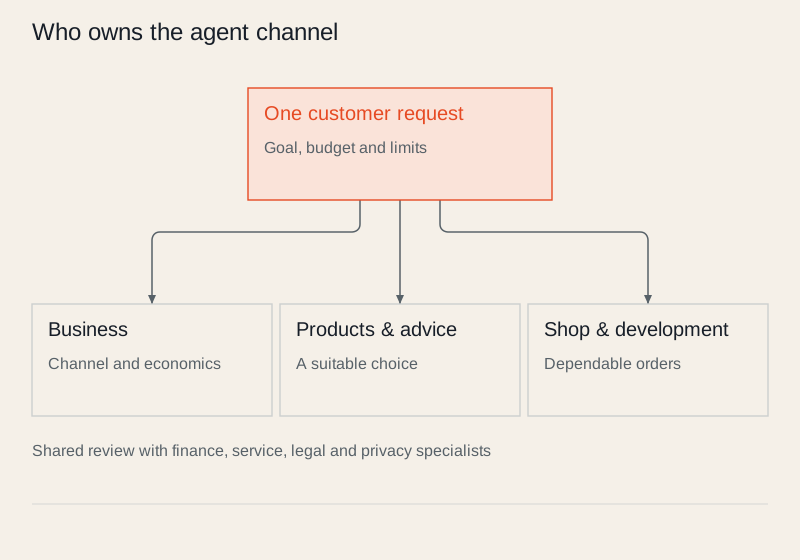
The merchant needs three perspectives: someone decides on money and objectives, someone knows the products and the customers’ problems, and someone makes sure the selection becomes the right order in the shop. In a small business, two people may cover all three responsibilities.
| Responsibility | Task in the suitcase purchase | Visible result |
|---|---|---|
| Management and sales | Set the budget and expected benefit | After its costs, the new route contributes to the business. |
| Product team and advisers | Establish outer dimensions, wheels and airline suitability | The traveller receives a selection she can assess. |
| Shop operations and development | Connect price, consent and order | The offer the traveller consented to becomes the correct order. |
Customer service and accounting later show where the journey creates extra work. Their findings feed into the next change, for example by answering a frequent question before the purchase.
Work on the journey therefore often starts with employees’ knowledge. They know the size customers choose incorrectly and the delivery promise that causes trouble every Friday. That knowledge must also reach the place where a customer asks an assistant for a suitcase.